 StuffID
The organized life /
Passports, papers and warranties: a place for the important stuff
Keep important documents findable with a simple folder structure, clear locations and useful reminders.
Separate documents by the reason you need them
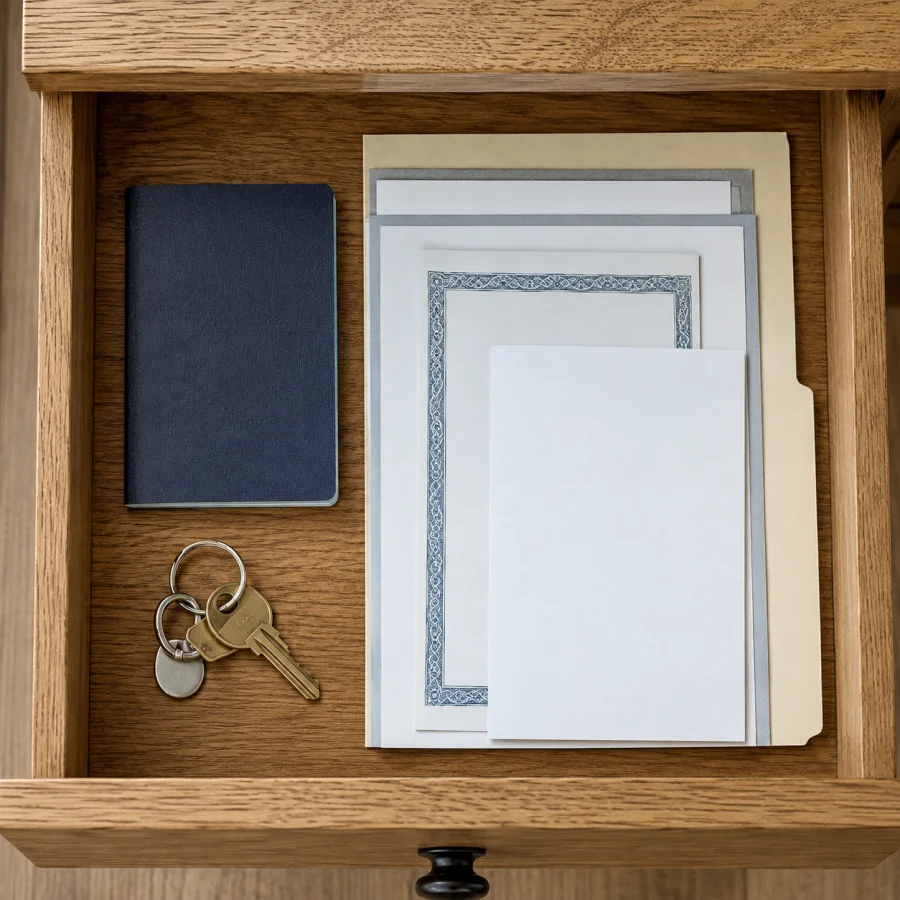
Start with a few practical groups: travel and identity, home, and purchases with warranties. Choose folders or envelopes you can clearly distinguish. The goal is to answer “which folder?” quickly when you need a document, rather than create dozens of categories you will forget to use.
Give each folder a specific physical location and record that location. “Home → Bedroom → Dresser → Document folder” is more useful than “papers.” Choose storage suited to the sensitivity and importance of the originals, and avoid leaving identity documents in shared or easily accessible places.
Record enough to find it
You can inventory a document without photographing every page. A photo of a closed folder or the outside of a passport may be enough to recognize it. Add a descriptive name and a short note about what the folder contains. Avoid recording sensitive numbers or details that you do not need for finding the original.
When using AI photo recognition, remember that the submitted photo is sent for processing. Review the app’s privacy policy and choose what to photograph accordingly. A searchable inventory is a finding aid; it does not replace the original document or a separate backup plan.
Connect warranties to the things they cover
A warranty is easier to find when it is associated with the actual product. In the product’s notes, record the location of its receipt and warranty papers. Use a clear description such as “Receipt in Home → Office → Warranty folder,” instead of creating an unrelated note called “receipt.”
If you know the warranty end date, add it to the item in StuffID and enable the relevant notifications. Check the original warranty terms when deciding what is covered. A reminder helps you notice a date; it does not determine coverage or extend the warranty. Avoid guessing dates when the paperwork is unclear.
Review at useful moments
Before a trip, find your travel documents and check the details you will need. After a significant purchase, file its paperwork while you still know where everything is. When you replace a device or move a folder, update the saved record at the same time.
A brief occasional review keeps the system useful: confirm that the folders are where the inventory says they are, remove records you no longer need and correct stale notes. Follow any retention requirements that apply to your documents before discarding originals. The result should be a small, reliable map to your important papers.