 StuffID
The organized life /
Stop losing things: give everything a home
A practical system for the passport, spare keys and mystery cable you keep putting somewhere safe.
Start with the things you actually search for
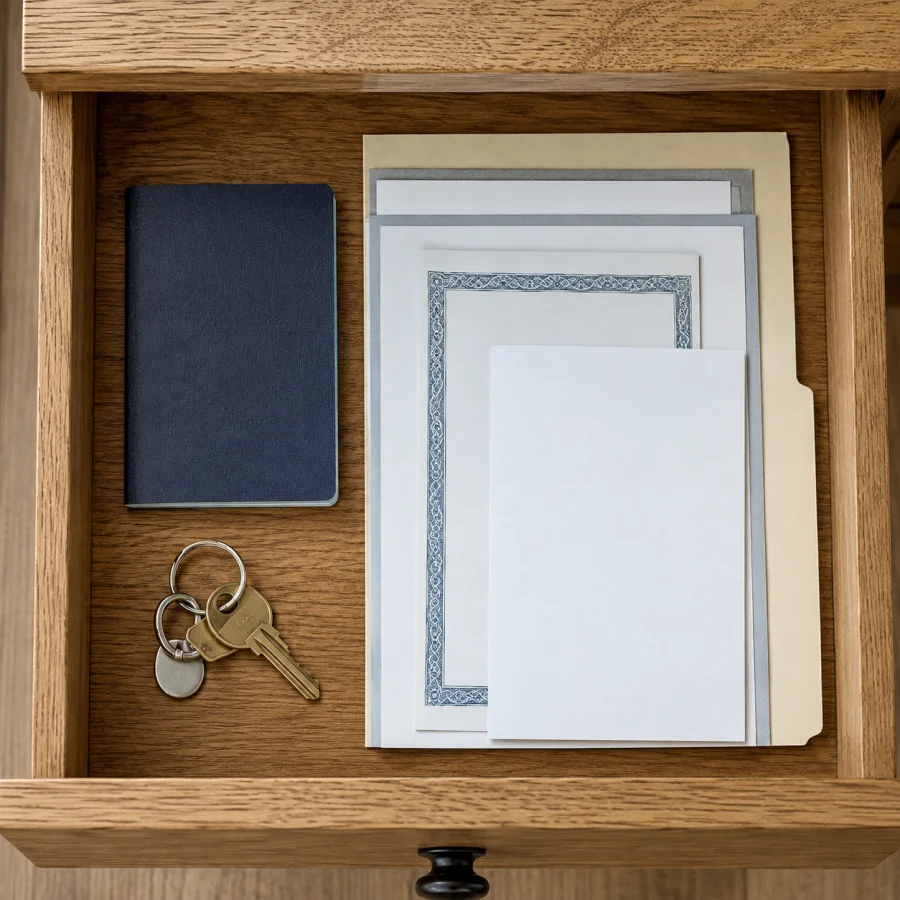
You do not need to catalog your whole home this weekend. Start with the last five things you struggled to find. A passport, spare keys, a charger, a screwdriver and a document folder are enough. This first list gives your system a useful job immediately, instead of turning organization into another unfinished project.
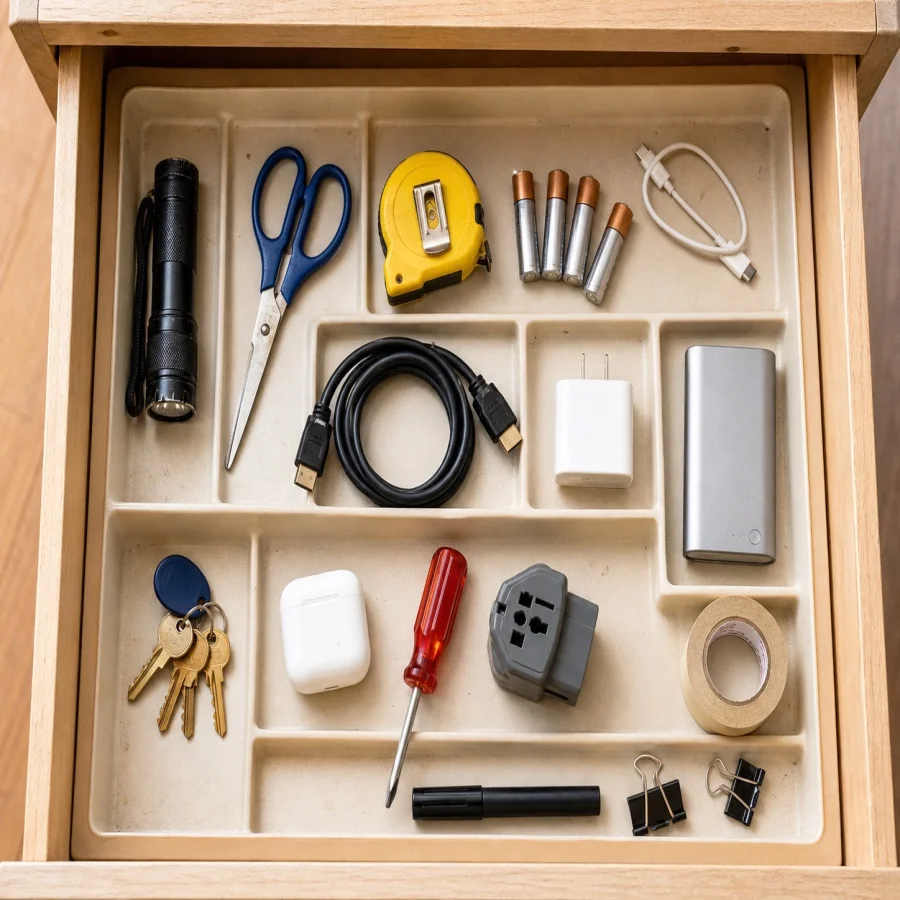
Choose one small area you can finish in a single sitting: a desk drawer or a hallway shelf. Take everything out, group related objects and return only what belongs there. Set aside things that need a different home. Avoid buying organizers before you know what you are organizing.
Choose a home you will really use
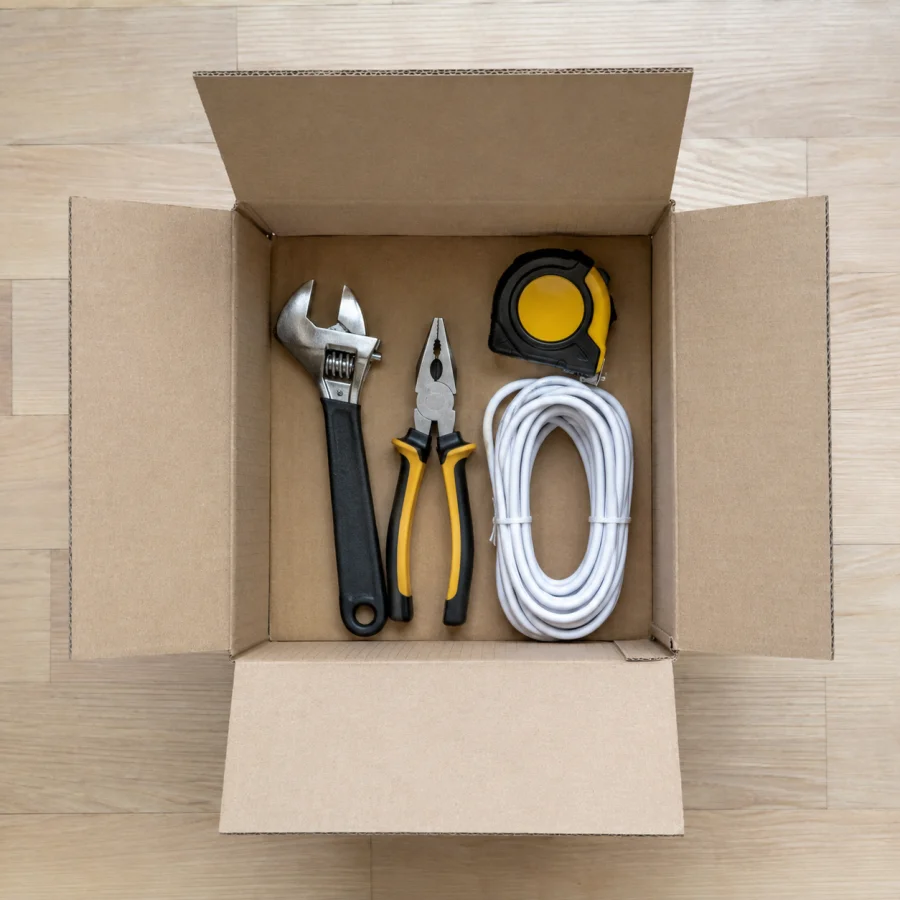
A storage place works when returning an item is easy. Keep everyday keys near the door. Keep charging accessories near the place you charge your devices. Put occasional tools together rather than spreading them between several drawers. A beautiful storage system that takes too much effort to maintain will soon become another hiding place.
Make location names specific enough for someone else to follow. “Bedroom → Dresser → Top drawer” is useful. “Safe place” is not. For containers within containers, record each step: Home → Office → Cabinet → Blue box. Label the physical box with the same name so the digital record and the real world agree.
Make a small visual inventory
Photograph your chosen drawer in good light with its contents visible. In StuffID, review the names and categories suggested by AI, correct anything ambiguous and save the items to their actual space. A description such as “long black HDMI cable” is easier to search than “cable 3.” Add a familiar alternate name or a useful tag if you might search for the item differently later.
The photograph helps you recognize an object, while the saved location tells you where to look. Neither can tell you that an object has moved by itself. Update the location when you put something somewhere new. Treat that update as the final step of putting the item away.
Keep the habit small
Before buying a replacement, search your inventory. Before leaving for a trip, check the saved places for travel essentials. Once a week, return the handful of things that drifted out of place and update anything that intentionally moved.
If you keep finding an item somewhere other than its assigned home, reconsider the home. The best system follows your daily routine. Start with five things, make those easy to find, and expand only when another drawer would make your life easier.